
Section 13 Rent Reviews: The New Rules Explained
Rent increases have always been a sensitive topic in the private rented sector. With the Renters’ Rights Act 2025 bringing significant changes to how and when you can increase rent, South and West Yorkshire landlords need to understand the new Section 13 rules.
Get it wrong, and you could face legal challenges, tribunal hearings, and potential penalties.
What is Section 13?
Section 13 of the Housing Act 1988 governs rent increases for assured and assured shorthold tenancies. It sets out the legal process landlords must follow when increasing rent during a periodic tenancy (or after the fixed term ends).
Under the old rules, landlords had flexibility to increase rent annually or more frequently if the tenancy agreement allowed. The new legislation significantly restricts this.
What’s Changed Under the Renters’ Rights Act 2025?
1. Maximum One Increase Per Year
From 1st May 2026, landlords will be limited to one rent increase per 12-month period for any tenancy. This applies regardless of what your tenancy agreement says.
Key points:
- The 12-month period starts from the date of the last increase (or tenancy start date)
- You cannot contractually override this limit
- Multiple properties with the same tenant = still only one increase per property per year
2. Two Months’ Notice Required
You must give tenants a minimum of two months’ written notice of any rent increase, using the correct Section 13 notice form.
Previously, one month’s notice was acceptable in some cases. That’s no longer sufficient.
3. Tenants Can Challenge “Unreasonable” Increases
Tenants now have stronger rights to challenge rent increases they believe are “unreasonable.” They can apply to the First-tier Tribunal (Property Chamber) within specific time limits.
The tribunal will consider:
- Market rents for comparable properties in the area
- The condition and features of the property
- Local rental market conditions
- Whether the increase is proportionate and justified
If the tribunal finds the increase unreasonable, they can set a different (usually lower) rent, backdated to the proposed increase date.
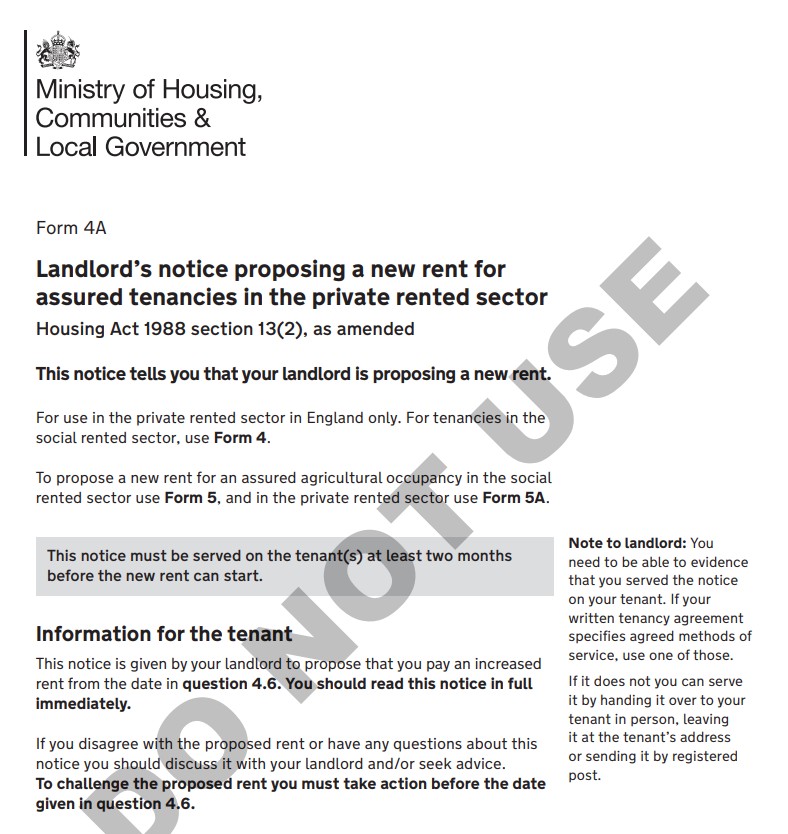
4. Prescribed Form is Mandatory
You must use the official Section 13 notice form. Informal emails, letters, or verbal agreements are not legally valid.
The form must include:
- The current rent
- The proposed new rent
- The date the increase takes effect (at least 2 months from the date of notice)
- Information about the tenant’s right to challenge
How to Increase Rent Properly
Step 1: Research Market Rents
Before proposing an increase, research comparable properties in your area. Check:
- Rightmove, Zoopla, OnTheMarket for similar properties
- Local letting agent rental valuations
- Recent lettings in your postcode area
Your proposed increase should be defensible based on market evidence. A tribunal will look at this data if challenged.
Step 2: Complete the Section 13 Form
Download the official Section 13 notice form from gov.uk. Fill it in completely and accurately.
Common mistakes to avoid:
- Using an out-of-date form
- Incorrect effective date (must be at least 2 months away)
- Not specifying the exact new rent amount
- Missing tenant name or property address details
Step 3: Serve the Notice Correctly
The notice must be served in writing. Acceptable methods:
- Hand delivery (get a signed receipt)
- First-class post to the rental property
- Recorded delivery (recommended for proof)
Do not:
- Send via email unless your tenancy agreement specifically allows it
- Rely on WhatsApp or text messages
- Assume verbal agreement is enough
Step 4: Wait for the Effective Date
The rent increase takes effect on the date specified in your notice (at least 2 months from service). The tenant must pay the new rent from that date.
If the tenant challenges the increase via tribunal, the proposed rent remains payable until the tribunal makes a decision.
Step 5: Keep Evidence
Retain copies of:
- The completed Section 13 form
- Proof of service (recorded delivery receipt, signed acknowledgement)
- Market rent research/comparable properties
- Any correspondence with the tenant
This evidence is critical if the increase is challenged.
What If the Tenant Challenges the Increase?
If your tenant applies to the tribunal to challenge the increase, the tribunal will:
- Review market evidence for comparable properties
- Inspect the property (usually)
- Consider the tenant’s representations
- Determine a “market rent” for the property
The tribunal can:
- Confirm your proposed rent (if it’s in line with market rates)
- Set a lower rent (if your increase was excessive)
- Rarely, set a higher rent (if you undervalued the property)
The tribunal’s decision is binding and backdated to your proposed effective date.
Best Practices for Rent Increases
1. Be Reasonable
Don’t try to increase rent by 20% just because the law allows one increase per year. Excessive increases will be challenged — and you’ll likely lose.
Aim for increases in line with:
- Local market conditions
- Inflation (CPI or RPI as a guide)
- Any significant improvements you’ve made to the property
Typical annual increases: 3-5% in stable markets, more if local rents have risen significantly.
2. Communicate Early
Before serving formal notice, have a conversation with your tenant. Explain why you’re increasing rent, show market evidence, and give them time to consider.
Good communication reduces conflict and challenges.
3. Factor in Void Periods
A tenant who can’t afford your increase may leave. Factor in the cost of:
- Void periods (average 2-4 weeks in South Yorkshire)
- Referencing and check-in costs for a new tenant
- Potential property condition issues when they leave
Sometimes, a smaller increase with a good tenant is better than a larger increase that triggers turnover.
4. Use Professional Help
If you’re unsure about market rents or how to complete Section 13 notices correctly, consult a professional letting agent. The cost of getting it wrong (tribunal fees, legal costs, lost rent) far exceeds the cost of expert advice.
Common Mistakes That Lead to Tribunal Challenges
- Increases significantly above market rate (greed never pays)
- Multiple increases in quick succession (no longer allowed)
- Poorly completed forms (technical errors can invalidate the notice)
- No market evidence (if challenged, you need to justify the increase)
- Retaliation increases (raising rent after a tenant complains about repairs)
Avoid these, and you’ll significantly reduce the risk of challenges.
The Bottom Line
Rent increases are a normal part of letting property, but the new rules require more care, evidence, and professionalism. If you’re fair, follow the process correctly, and keep increases in line with market conditions, you’ll have no issues.
Try to push your luck with excessive increases, and the tribunal will bring you back to reality — at your expense.
Need help with rent reviews or market valuations? At Rent Right Estates, we provide accurate, evidence-based rental valuations and handle Section 13 processes for our managed properties. Get in touch to discuss your portfolio.
This article provides general guidance on Section 13 rent reviews. It should not be considered legal advice. For specific situations, consult a qualified legal professional or letting agent.

About the Author
Jeff Brown
Founder, Rent Right Estates Ltd
Jeff Brown is the founder of Rent Right Estates Ltd, a compliance-led lettings and property management company serving landlords and tenants across South and West Yorkshire. With a rigorous focus on doing things correctly first time, Jeff helps landlords stay fully compliant with the latest legislation — including the Renters’ Rights Act 2025/26, EPC requirements, deposit protection law and more.